PART 3 AND FULL STORY: I spent my entire life keeping my true identity private from my parents2-
PART 3
The money had begun with a building.
Not a mansion.
Not an empire.
A building.
In 1987, Grandma Evelyn and her older sister, Margaret,
purchased a narrow three-story commercial property on the edge of a neighborhood that was only beginning to recover from years of decline.
Margaret was the bold one.
Grandma said so herself in the letter.
Margaret saw possibilities in cracked brick and empty storefronts.
Evelyn saw repair bills.
Margaret won.
Together, they bought the property with savings, a small inheritance from their father, and a loan that both women apparently lost sleep over.
For years, the ground floor housed a pharmacy.
Upstairs were offices.
The neighborhood gradually changed.
Property values rose.
Eventually a development company purchased the entire block.
By then Margaret was ill.
She never married.
She had no children.
And when she died, she left her half of the proceeds to Grandma.
But that was not the part that made my mother stop reading.
The important part came later.
Margaret had once been engaged.
The engagement ended quietly.
Years afterward, she remained close to my mother, Patricia, when Patricia was a child.
According to Grandma’s letter, Aunt Margaret had established an investment account using part of her property proceeds.
Her intention was simple.
When Patricia became an adult, some of the money would help her begin her life.
Grandma was to manage it.
My mother stared at the page.
“I never knew that.”
I continued reading.
Margaret died before the arrangement was formally converted into a trust.
The account therefore passed legally to Grandma under the estate documents in place at the time.
There had been no legal requirement for Grandma to transfer it to Patricia.
But Grandma considered it morally separate from her own money.
She intended to give it to my mother gradually.
And she did.
The down payment.
The second mortgage.
The business loan.
Tuition assistance.
Emergency expenses.
What my parents remembered as Grandma helping whenever times were difficult had, in Grandma’s mind, partly come from Margaret’s intended gift to Patricia.
My mother pressed her fingers against her lips.
“That’s where it came from?”
“Apparently.”
She shook her head.
“She always said it was savings.”
“In a way, it was.”
“No.”
Patricia looked at me.
“She let me think she was sacrificing for us.”
The sentence contained no anger.
Only bewilderment.
We read on.
Grandma explained that she had made a mistake.
Not by helping Patricia.
She never regretted that.
Her mistake was refusing to explain.
At first, she had been protecting Margaret’s privacy.
Later, she feared Patricia would feel indebted to an aunt who was no longer alive.
Then enough years passed that telling the truth seemed awkward.
And awkwardness became postponement.
Eventually, Grandma could no longer remember why she had remained silent in the first place.
Her words were painfully simple.
I thought silence was kindness.
Sometimes it was only silence.
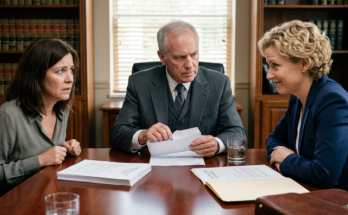
My mother sat back.
For a while, we listened to the hum of the conference-room ventilation.
Then she said, “That sounds like her.”
“What part?”
“Thinking she could avoid a difficult conversation until it became unnecessary.”
She gave a quiet laugh.
“I do that too.”
I nearly responded automatically.
Nearly said, Yes, you do.
But something in her face stopped me.
This was not the moment to collect old debts.
So I said, “Maybe we all do.”
She looked at me as if she knew I had changed the sentence before speaking it.
We returned to the letter.
Over the decades, the remaining investments from Margaret’s property proceeds grew.
Grandma added some of her own money.
She reinvested dividends.
Sold certain holdings.
Bought others.
By the time I was born, the account had become tangled with her broader portfolio.
Samuel Reed, her accountant, later helped her separate the history.
Then came a paragraph about me.
When Mara was born, Margaret had been gone seven years.
I remember holding that baby and thinking how unfair time can be. Margaret would have adored her.
Patricia stopped.
Her eyes filled.
“She would have?”
“I don’t know.”
“She would have.”
My mother touched the page.
“Aunt Margaret loved babies. She volunteered at the hospital nursery when she was younger.”
Another piece of family history I had never heard.
Grandma wrote that she initially considered transferring the remaining Margaret-originated investments directly to Patricia.
But by then, she had already given my mother substantial support.
Patricia had a home.
A family.
A growing business with Michael.
Grandma decided to continue holding the investments.
Years later, she began considering the next generation.
Not me specifically at first.
All three grandchildren.
My siblings and me.
That changed gradually.
My brother received considerable financial assistance with school.
My sister received help buying property.
I received far less.
Again, Grandma emphasized that this was not because anyone deserved more or less affection.
She simply helped when people asked and when needs arose.
I rarely asked.
My mother paused there.
“You really didn’t.”
“No.”
“Why?”
The question was so unexpected that I laughed once.
“You’re asking why I didn’t ask for money?”
“I’m asking why you never asked any of us for help.”
I thought about it.
The easy answer would have been pride.
There was some of that.
But not enough.
“I learned pretty early that asking usually came with a comparison.”
Her expression changed.
“What do you mean?”
“If I struggled with something, Dad would say Daniel had managed it. Or you’d tell me how organized Lisa was. If I needed help, I usually ended the conversation feeling like needing it was evidence I had failed.”
Patricia’s mouth opened.
Then closed.
“We were trying to motivate you.”
“I know.”
And I did know.
That might have been the strangest realization of all.
For years, I had interpreted their behavior as deliberate rejection.
Sitting across from my mother, I began to see something less dramatic and perhaps more ordinary.
They had believed comparison created ambition.
For my brother, maybe it did.
For my sister, perhaps it barely registered.
For me, it created distance.
Different children can grow up under the same roof and experience entirely different families.
Patricia looked down.
“My father did that to me.”
“Compared you?”
“To my sister.”
“Margaret?”
“All the time.”
She smiled faintly.
“Margaret was outgoing. Brave. Good at everything people notice.”
“And you?”
“I was careful.”
The way she said it made careful sound like a childhood fault.
I thought of my mother labeling me difficult whenever I resisted criticism.
Patterns rarely announce themselves when they arrive.
Sometimes they simply cross generations wearing different clothes.
We kept reading.
Grandma’s final explanation was less complicated than I expected.
She had left the remaining estate to me for three reasons.
First, she believed lifetime financial support to Patricia and my siblings had already been substantial.
Second, the original Margaret investments had grown beyond anything Margaret herself could have imagined, and Grandma liked the idea that some part of Margaret’s generosity would reach another generation.
Third, Grandma trusted me to decide what responsibility meant.
That phrase again.
Responsibility.
She did not tell me to divide the money.
She did not tell me to keep it.
She did not require a foundation.
There was no secret condition.
No hidden codicil.
No legal trap.
She simply trusted me with a decision.
The final lines were addressed to both of us.
Patricia, you may believe I chose Mara over you.
I did not.
I spent much of my life choosing you in ways neither of us counted.
Mara, you may believe this means I chose you above everyone else.
I did not.
Money is very good at pretending it can measure love.
Do not let it.
If this letter helps you understand one another, good.
If it does not, at least I have finally said what I should have said years ago.
My mother read the last sentence three times.
Then she folded her hands in her lap.
“I sued you.”
There it was.
No excuse around it.
No explanation in front of it.
“I know.”
“I believed…”
She stopped.
“What?”
“That you had convinced her.”
“I didn’t.”
“I know that now.”
The words should have felt satisfying.
Instead I felt tired.
Patricia looked toward the window.
“When Martin told us how much the estate was, I couldn’t understand it. Four point seven million dollars to you. Nothing to me.”
She swallowed.
“It felt like my mother had written down what I had always been afraid of.”
“That she loved you less?”
Patricia nodded.
I had never imagined my mother carrying that fear.
She had always seemed so certain of Grandma.
They spoke every Sunday.
They shopped together.
They argued about recipes and doctors and whether Grandma should still be driving.
From the outside, they had been close.
But closeness did not eliminate insecurity.
Sometimes it gave insecurity more places to hide.
“When I saw your name in the will,” she continued, “I thought it meant she had been disappointed in me.”
“So you decided I must have caused it?”
“That was easier.”
Her answer was almost a whisper.
“Easier than believing she chose it.”
I nodded.
That I understood.
We sat without speaking for several minutes.
Then my mother said, “I’m sorry.”
I had imagined apologies from her before.
In some versions, they were elaborate.
In others, she finally understood every single moment that had hurt me.
Reality was quieter.
Two words.
No music.
No perfect transformation.
And perhaps because of that, I believed her.
But believing an apology did not automatically restore trust.
“Thank you,” I said.
Her face fell slightly.
I knew she had hoped for more.
I did not have more yet.
That was all right.
Forgiveness, I was beginning to understand, was not the same thing as pretending a relationship had never been damaged.
Sometimes forgiveness began simply by refusing to damage it further.
My father took longer.
Patricia told him about the letter that evening.
He called me the next morning.
I let it go to voicemail.
Then he called again.
I answered.
“Mara.”
“Hi, Dad.”
“Your mother told me.”
“I figured she would.”
A pause.
“So Margaret’s money was part of all this?”
“Part of the history.”
He exhaled.
“I didn’t know.”
“Neither did Mom.”
“I mean about all the help.”
That surprised me.
“You knew Grandma helped with the house.”
“Yes, but Patricia handled most of that. I didn’t know your grandmother was keeping track.”
“It doesn’t sound like she was keeping score.”
“No.”
He sounded uncomfortable.
“I suppose there’s a difference.”
“There is.”
Another pause.
Then he said, “I shouldn’t have said what I said in court.”
I remembered him declaring that I had been a problem my entire life.
“No.”
“I was angry.”
“I know.”
“That doesn’t make it right.”
“No.”
He waited.
Perhaps he expected me to rescue him from the discomfort.
I didn’t.
Finally he said, “Your mother wants us to consider dropping the case.”
“What do you want?”
“I don’t know.”
I appreciated the answer more than certainty.
“At least that’s true,” I said.
He gave a tired laugh.
“Your grandmother would have liked that response.”
“Yes.”
“She always thought I talked before I knew what I thought.”
“She may have mentioned it.”
He laughed again.
For the first time in months, the sound did not irritate me.
The next court conference happened three weeks later.
The atmosphere was completely different.
Martin Ellis informed the judge that Patricia and Michael Bennett wished to withdraw most of their claims.
There remained a technical question concerning reimbursement of certain estate expenses, which the attorneys could resolve separately.
The allegations of incapacity and undue influence were withdrawn.
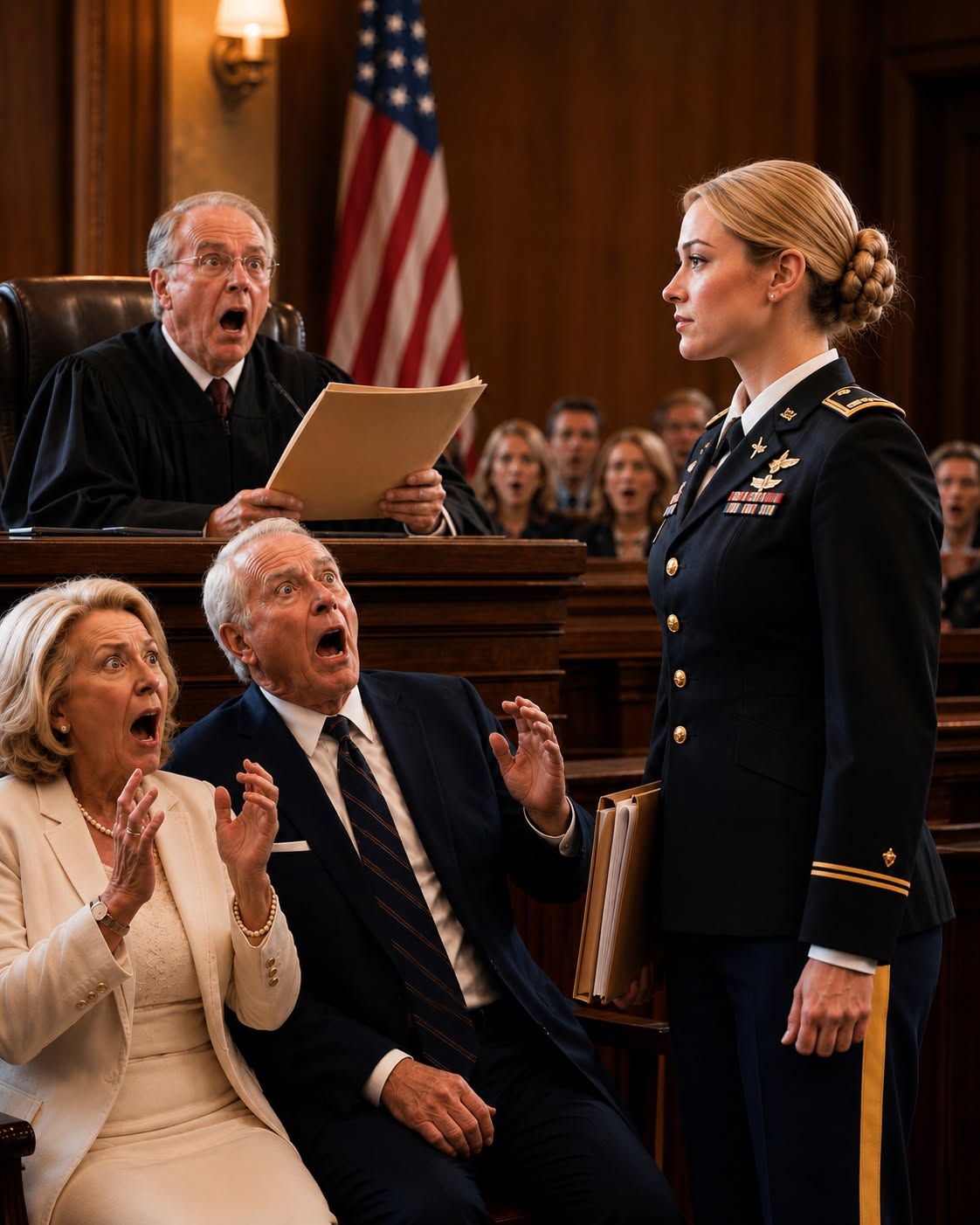
Judge Whitmore confirmed several matters for the record.
Then he looked at my parents.
“You understand that dismissal will end your challenge to the beneficiary designation?”
My mother said yes.
My father hesitated only a moment.
“Yes, Your Honor.”
Judge Whitmore turned to me.
“Ms. Bennett?”
“Yes, Your Honor?”
“You understand that once administration is complete, the inheritance will pass according to Mrs. Carter’s estate plan?”
“I do.”
The judge nodded.
Then he closed the file.
That was it.
No one won in the way people imagine courtroom victories.
My parents left without the money.
I kept the inheritance.
But those facts did not capture what had actually happened.
Outside, Patricia approached me.
“Can we have coffee?”
I looked at Daniel.
He pretended to be deeply interested in his phone.
“Today?”
“If you have time.”
I did.
We went to a café two blocks from the courthouse.
My father came too.
For the first twenty minutes, we talked about nothing important.
Traffic.
Coffee.
My brother’s new dog.
A neighbor who had installed an unnecessarily large fountain.
Then my father asked, “Why didn’t you tell us more about your career?”
I stirred my coffee.
“I tried.”
“I mean after.”
“After what?”
“After we missed the ceremony.”
There were so many possible answers.
Because I was angry.
Because I was hurt.
Because withholding information gave me control.
Because I no longer wanted to audition for interest.
All were partly true.
Finally I said, “Because I wanted you to ask.”
My father looked down.
“We should have.”
“Yes.”
My mother asked, “Are there things we can still ask?”
The question caught me off guard.
I looked at her.
“Yes.”
So she did.
What kind of cases did I work on?
What did my rank mean?
How often did I move?
Did I enjoy teaching younger attorneys?
Was I staying in until retirement?
Some questions were basic.
A few made me laugh.
My father had apparently believed JAG officers spent most of their time prosecuting dramatic courtroom cases like television characters.
“Mostly,” I told him, “we spend a great deal of time reading documents no television audience would tolerate.”
For nearly an hour, my parents learned about a life I had been living for almost two decades.
They did not suddenly understand me.
But they were listening.
That was new enough.
The inheritance took another five months to settle fully.
After taxes, fees, and final estate expenses, the amount transferred to me was slightly less than the headline number everyone had obsessed over.
I remember opening the account statement.
For several minutes, I simply looked at it.
Money that large does not immediately feel like money.
It looks like data.
Digits.
Commas.
An abstraction capable of changing very concrete things.
I paid off the remaining balance on my modest home.
I increased my retirement investments.
I created an emergency reserve larger than I would ever reasonably need.
Then I did nothing for three months.
People assumed inheriting millions would make decisions easy.
It did the opposite.
Every decision suddenly seemed symbolic.
If I gave some to my siblings, what did that mean?
If I gave some to my parents, would I be rewriting Grandma’s will?
If I kept everything, was that selfish?
If I donated most of it, was I trying to prove something?
Eventually, I remembered Grandma’s sentence.
You know the difference between possession and responsibility.
Responsibility did not mean sacrificing everything.
It meant choosing deliberately.
So I called Samuel Reed.
Then Helen Markham.
Then a financial adviser Daniel recommended.
And eventually, I called Patricia.
“I want to show you something.”
We met at Grandma’s house.
The property had not yet been sold.
I had delayed deciding what to do with it.
My mother entered the kitchen and immediately opened the cabinet where Grandma kept tea.
Then she stopped herself.
“Oh.”
The shelves were almost empty.
“Habit,” she said.
“I do it too.”
We sat at the small wooden table.
I showed her a proposal.
I intended to set aside $750,000 to create a scholarship and emergency assistance fund.
Not in Grandma’s name alone.
In Evelyn and Margaret Carter’s names.
The fund would assist people entering public-service legal careers who lacked family financial support.
My mother stared at the page.
“Why legal careers?”
“It’s what I understand.”
“And Margaret?”
“She helped create the money.”
Patricia touched her aunt’s name.
“She would have loved this.”
“I thought you might know.”
My mother read further.
“What about Daniel and Lisa?”
My siblings.
“I’m giving each of them a smaller personal gift. Enough to be meaningful, not enough to rearrange their lives.”
“And us?”
There it was.
I had known the question would come.
Not because my mother expected money.
Because there was no graceful way around discussing it.
“I’m not dividing the estate.”
She nodded slowly.
“I understand.”
“But I want to cover the remaining balance on the loan Dad took for the business, provided we treat it as a one-time gift and everyone signs the appropriate paperwork.”
Her eyes widened.
“Mara, you don’t have to.”
“I know.”
“Then why?”
“Because Grandma spent years helping this family without explaining what money meant to her. I don’t want to repeat that.”
She looked at me for a long moment.
“This isn’t because of the lawsuit?”
“No.”
“It’s not because you feel guilty?”
“No.”
“Are you sure?”
“Yes.”
She smiled.
“You sound like a lawyer.”
“I’ve been told.”
Then I showed her one final line in the proposal.
I planned to keep Grandma’s house.
Not forever necessarily.
For now.
I wanted a place where the family could gather without anyone claiming ownership of the memory.
Patricia’s eyes filled again.
“You’ll keep the kitchen?”
“Unless you insist on preserving that wallpaper.”
She looked around at the tiny yellow flowers covering the walls.
“Your grandmother loved this wallpaper.”
“Grandma was wrong about some things.”
Patricia laughed.
A real laugh.
The kind that took several years off her face.
“All right,” she said. “The wallpaper can go.”
My relationship with my parents did not become perfect.
That would have been easier to write than to live.
My father still had a habit of comparing people.
The first time he did it after the lawsuit, he stopped halfway through the sentence.
“Your brother always—”
He caught himself.
“Actually, never mind.”
I smiled.
“Progress.”
He rolled his eyes.
But he smiled too.
My mother sometimes overcorrected.
After learning how much she had missed, she began asking about every meeting, trip, award, and dinner.
Eventually I had to tell her she did not need an itinerary of my entire life.
“I’m trying to be interested.”
“You can be interested without monitoring my dentist appointment.”
“That’s fair.”
A week later she texted:
How was the dentist?
Then, immediately:
Ignore that. I am learning.
I laughed harder than the message deserved.
My siblings had their own reactions.
Daniel—my brother—was embarrassed that Grandma had helped with so much of his education.
“I honestly didn’t know how much she paid,” he told me.
“She didn’t want you keeping score.”
“Apparently she was the only one allowed to keep score.”
“She called it recordkeeping.”
“That is exactly what someone keeping score would call it.”
Lisa cried when I told her about the small gift I planned to give her.
Then she refused it.
Then accepted half.
Then called back two days later asking whether refusing half had created complicated tax paperwork.
Our family remained ourselves.
That was perhaps the most comforting thing.
Healing did not replace personalities.
It only gave them more room.
One year after the lawsuit was dismissed, we gathered at Grandma’s house.
The terrible wallpaper was gone.
The kitchen had been repainted.
My father complained that the new light fixture was too modern.
My mother told him nobody had asked.
My brother brought dessert.
My sister brought flowers.
I brought Grandma’s blue-ribbon letters.
The scholarship fund had just selected its first three recipients.
One was a former teacher entering law school after years in public education.
Another was the daughter of a mechanic who wanted to work in veterans’ advocacy.
The third was a young man who had spent several years as a court clerk and hoped to become a public defender.
I placed their thank-you letters on the kitchen table.
Patricia read each one.
Then she touched the photograph of Grandma and Margaret I had placed nearby.
It had been taken in front of the old commercial building in 1988.
Grandma looked anxious.
Margaret looked delighted.
“You can tell which one wanted to buy the building,” I said.
My mother laughed.
“Aunt Margaret could convince anyone of anything.”
“Apparently even Grandma.”
“Oh, especially Grandma.”
My father poured coffee.
“So what happens to the fund after you retire?”
“It continues.”
“Who runs it?”
“A board.”
“You’re on the board?”
“Yes.”
He nodded.
“Sounds complicated.”
“It is.”
He took a sip.
Then, almost casually, he said, “You’re good at complicated things.”
I looked at him.
He seemed unaware of what he had just done.
Or perhaps he knew exactly what he had done and was trying not to make it important.
Either way, I accepted it.
“Thanks, Dad.”
He nodded.
My mother, who noticed everything emotional once she had decided to start noticing, glanced between us.
She said nothing.
Thank goodness.
Some moments survive better without commentary.
That afternoon, after everyone left, Patricia remained behind.
We stood at the front door watching the others walk toward their cars.
“Do you ever wish she had just told us?” my mother asked.
“About the money?”
“About all of it.”
“Yes.”
“Me too.”
She leaned against the doorframe.
“But maybe we wouldn’t have listened.”
I looked at her.
“That sounds pessimistic.”
“It’s realistic.”
She smiled.
“I spent a lot of years believing that being a good mother meant knowing what was best before anyone told me what they needed.”
I waited.
“I was wrong about that.”
The admission settled gently between us.
I did not rush to contradict her.
She continued.
“I can’t change what I missed.”
“No.”
“But I can stop missing what happens next.”
That was the closest my mother ever came to giving a speech.
It was enough.
I hugged her.
Not because everything had been repaired.
Not because the lawsuit no longer mattered.
Not because childhood had been rewritten.
I hugged her because the woman standing in front of me was trying.
And I had reached a point in my life where trying mattered more than pretending.
After she left, I returned to Grandma’s chair by the window.
The evening light stretched across the floorboards.
On the side table sat the old ceramic peppermint dish.
I had refilled it.
I took one.
Then another.
Grandma would have pretended not to notice.
For most of my life, I believed being overlooked had taught me independence.
Maybe it had.
It taught me how to build a life without applause.
How to trust my own judgment.
How to survive rooms where no one seemed particularly interested in what I had to say.
But independence had a shadow.
If you become too good at needing nothing, eventually people believe you truly need nothing.
I had helped build some of that distance myself.
Not all of it.
But some.
Grandma’s inheritance gave me financial freedom.
Her letters gave me something harder to quantify.
Permission to look at my family without simplifying them.
My mother had hurt me.
She had also spent years believing she was encouraging me.
My father had dismissed accomplishments he did not understand.
He was also learning, awkwardly and late, to ask questions.
Grandma had been wise.
She had also avoided important conversations.
Margaret had left behind generosity without ever knowing what shape it would take.
And I was neither the rejected daughter my parents had imagined walking into court nor the flawless granddaughter Grandma had supposedly chosen above everyone else.
I was simply Mara.
A lawyer.
A daughter.
A granddaughter.
A woman with $4.7 million worth of choices and a family learning, one imperfect conversation at a time, how to speak before silence became a habit.
Months later, during a ceremony recognizing several senior officers, I looked toward the back of the room.
Patricia and Michael were there.
My father wore a tie that was slightly crooked.
My mother had arrived forty minutes early because she had become terrified of missing anything important.
When my name was announced, they stood with everyone else.
I could see my mother clapping.
My father raised one hand briefly when our eyes met.
Afterward, Patricia hugged me.
“We understood this invitation,” she said.
“I made it very clear.”
“You used three reminder emails.”
“Experience has taught me caution.”
My father shook my hand.
Then, unexpectedly, pulled me into a brief hug.
“Proud of you, kid.”
For years, I had imagined how those words would feel.
I thought they might repair something.
They didn’t.
Not exactly.
The past remained where it was.
But the words created something new beside it.
And that, I discovered, could be enough.
That night, when I returned home, there was a voicemail from my mother.
She had apparently discovered one of Grandma’s old recipe cards inside a cookbook.
She wanted to know whether I wanted a copy.
At the end of the message, she added:
“Oh, and Mara? I know you probably already know this, but your grandmother was proud of you long before any of us understood what you were doing. I’m glad she showed up when we didn’t.”
I listened twice.
Then saved the message.
Not because I needed proof.
I had spent too many years believing love had to be proved by perfect attendance, equal praise, or exact distributions in a will.
Grandma had been right.
Money could not measure it.
Neither could a courtroom.
Sometimes love was a crooked photograph from a promotion ceremony.
Sometimes it was a ledger nobody knew existed.
Sometimes it was a difficult letter tied with an old blue ribbon.
And sometimes it was simply someone finally asking about the life they should have asked about years ago—and staying long enough to hear the answer.
-END OF PART 3-LET SAY YES AND LIKE, SHARE THIS POST IN FACEBOOK SO THAT WE HAVE THE MOTIVATION TO SHARE MORE STORIES