Part 2:
His voice became quieter.
“I don’t have that much.”
He unscrewed the metal lid and began removing crumpled dollar bills.
There were ones, fives, and a few tens, all folded into small bundles.
Some were held together with rubber bands. Others had
handwritten notes attached to them.
Paper route.
Snow shoveling.
Mr. Jenkins’ lawn.
Birthday money.
Ethan arranged the bills carefully on the hood.
“I have twelve hundred dollars,” he said. “It’s everything I’ve saved.”
David looked uncomfortable.
“I told him we shouldn’t waste your time,” he said quickly. “But he wanted to ask. We understand if the answer is no.”
Ethan kept his eyes on the money.
“I’ve had a paper route since I was thirteen,” he said. “I also work weekends at Palmer’s Grocery. I could pay you the rest in installments. Maybe two hundred a month.”
I looked at the jar.
Then I looked at David’s worn boots, his tired face, and the grease stains beneath his fingernails.
These two had not come hoping to trick me.
They had come because Ethan had spent years saving for something that most teenagers took for granted.
A way to get to work.
A way to help his family.
A little freedom.
For a moment, I saw myself at seventeen.
I saw the rusted blue pickup truck I had wanted more than anything. I saw myself standing beside it with only half the asking price in my pocket.
And I remembered the stranger who had given me a chance.
His name was Mr. Harris.
At least, that was the name written on the truck’s registration.
I had never known much about him. He had been an older man with silver hair and a deep scar along his chin.
When I told him I only had $800 for his $1,500 truck, he studied me for a long time.
Then he asked why I needed it.
I told him the truth.
My mother was sick. My father had left years earlier. I needed to get to my after-school job at a warehouse, and the buses stopped running before my shift ended.
Mr. Harris handed me the keys.
“Eight hundred is enough,” he said.
I promised to repay him.
He shook his head.
“Don’t pay me back,” he said. “Pay it forward when you get the chance.”
I had thought about those words many times over the years.
But opportunities to repay kindness rarely arrive with a sign.
Sometimes, they walk three miles carrying a glass jar.
I looked at Ethan.
“You know,” I said slowly, “the brakes have a little squeak.”
His expression changed.
He probably thought I was about to explain why I couldn’t lower the price.
“I can’t sell a car with squeaky brakes for three thousand dollars,” I continued.
David frowned slightly.
Ethan waited.
“So give me a thousand.”
Neither of them spoke.
I pointed to the remaining money.
“Keep the other two hundred for gas, registration, and insurance.”
Ethan stared at me.
“I’m sorry?” he whispered.
“One thousand dollars,” I repeated. “And the car is yours.”
His face went completely still.
Then his eyes filled with tears.
David turned his head toward the street, pressing his lips together as though he was trying to keep his emotions under control.
“But it’s worth more than that,” Ethan said
“I know.”
“I can pay you more later.”
“No.”
“At least let me—”
“Ethan,” I said, “someone helped me once.
I’ve been waiting a long time for the chance to do the same.”
He looked down at the money.
“I don’t know what to say.”
“Say you’ll take care of it.”
“I will.”
“And say you’ll help someone else when you get the chance.”
He nodded quickly.
“I promise.”
We completed the paperwork at my kitchen table. Because Ethan was still under eighteen, the title had to go into David’s name temporarily.
Rachel came downstairs while we were signing.
When I quietly explained what had happened, she looked through the window at Ethan sitting inside the Civic.
“You sold it for how much?” she asked.
“One thousand.”
She stared at me.
For one terrifying second, I thought she was angry.
Then she smiled.
“You did the right thing.”
Before they left,
I drove them to the nearest insurance office and helped arrange temporary coverage.
David drove the Civic home because Ethan did not yet have his license.
Ethan sat in the passenger seat, smiling so widely that his cheeks must have hurt.
As the Civic pulled away, he rolled down the window.
“I’ll take good care of her!” he shouted.
I stood in the driveway until the car disappeared around the corner.
That night, I felt lighter than I had in years.
I had lost two thousand dollars.
But it didn’t feel like a loss.
It felt like closing a circle that had remained open since I was seventeen.
For the next several weeks, I occasionally wondered about Ethan.
I wondered whether he had passed his driving test.
I wondered whether the Civic was still running.
I wondered whether I had made a mistake by trusting someone I barely knew.
Then, about two months later, an envelope arrived in the mail.
There was no return address.
Inside was a photograph of Ethan standing beside the Civic. He held up his new driver’s license with one hand and gave a thumbs-up with the other.
On the back, he had written:
“I passed on my first try. Thank you for changing my life.”
Beneath that was another line.
“My sister says thank you too.”
I placed the photo in my desk drawer.
I assumed that was the end of the story.
I was wrong.
Because three weeks later, David called me late at night.
His voice was trembling.
And the first thing he said was:
“Your old Honda may have just saved my daughter’s life.”
For a moment, I thought I had misunderstood him.
“What happened?” I asked.
David took a shaky breath.
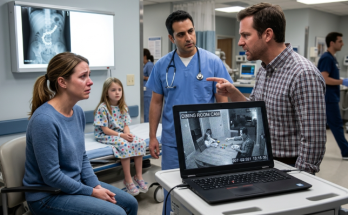
“Ethan’s sister, Lily, has a heart condition,” he said. “She was born with it. Usually,
we have warning before something goes wrong, but tonight she collapsed.”
I gripped the phone tighter.
“Is she okay?”
“She’s at St. Matthew’s Hospital. The doctors are working on her now.”
He paused.
“The ambulance was delayed. There was a major accident on the highway.
Ethan got her into the Civic and drove her himself.”
My stomach dropped.
“How far is the hospital?”
“Almost twenty minutes.”
David’s voice cracked.
“The doctor said another ten minutes could have made the difference.”
I sat down at the kitchen table.
Rachel entered the room and looked at me with concern. I put the call on speaker.
David continued.
“Ethan stayed calm. He remembered everything the doctors had told us. He called ahead, drove carefully, and got her there.”
In the background, I could hear hospital announcements.
“I don’t know what would have happened if he didn’t have that car,” David said. “I was at work. Our neighbor doesn’t drive. We didn’t have anyone else.”
“You don’t owe me anything,” I said.
“Yes, we do.”
“No. You paid for the car.”
“You know what I mean.”
I did.
But I didn’t know how to respond.
Rachel leaned closer to the phone.
“Please let us know how Lily is doing,” she said.
“We will.”
The following afternoon, David called again.
Lily was stable.
She needed surgery, but the doctors believed she would recover.
A week later, Ethan brought the Civic back to my house.
At first, I thought something was wrong with it.
He stepped out wearing a grocery store uniform and carrying a small paper bag.
“How is your sister?” I asked.
“She’s home,” he said. “Tired, but she’s okay.”
Then he handed me the bag.
Inside was a homemade apple pie.
“My dad made it,” he said. “He’s not very good at talking when he gets emotional.”
I smiled. “And the pie helps?”
“He says food is easier than words.”
We sat on the front steps and talked for almost an hour.
Ethan told me that Lily had been born with a defect in her heart. Their mother had died when Lily was six, leaving David to raise both children alone.
David worked maintenance at a factory during the day and repaired appliances for neighbors in the evenings. Money was always tight, especially with Lily’s medical bills.
Ethan had started delivering newspapers because he wanted to help.
“At first, I was saving for a video game,” he admitted. “Then Dad missed one of Lily’s appointments because the bus was late. That’s when I started saving for a car.”
He looked toward the Civic.
“I thought it would take me another two years.”
“You earned it,” I said.
“You gave it to me.”
“No. You earned every dollar in that jar. I only adjusted the price.”
He smiled.
Before he left, he handed me a folded piece of paper.
“What’s this?”
“A promise.”
On the paper, he had written:
“I, Ethan Cole, promise that when I am able, I will help someone the way you helped me.”
Below the sentence, he had signed his name and written the date.
I started to tell him that the note was unnecessary.
Then I remembered Mr. Harris.
I remembered making a similar promise in my heart.
So I folded the paper and placed it in my pocket.
“I’ll keep it,” I said.
Life moved quickly after that.
Rachel gave birth to our second daughter.
I changed jobs.
We moved to a different part of town.
The photograph of Ethan and his driver’s license remained in my desk drawer, along with his handwritten promise.
For a while, he sent me updates.
He graduated from high school.
He enrolled in community college.
He continued working at the grocery store.
He sent me a photograph when Lily graduated from middle school.
In every picture, the Civic appeared somewhere in the background.
Then the messages slowly stopped.
Not because anything was wrong.
Life simply carried us in different directions.
Five years passed.
Then ten.
I sometimes wondered what had become of Ethan and his family.
The Civic had probably been sold for parts by then. Perhaps Ethan had moved to another state, started a family, or forgotten about the man who once sold him a cheap car.
That didn’t bother me.
Kindness is not a loan.
You do not give it expecting monthly payments.
You give it because someone needs it, and because you can.
Fifteen years after I sold the Civic, I was driving home from work when my newer car began making a terrible grinding sound.
I pulled into a repair shop called Cole Family Auto.
The name meant nothing to me at the time.
A young mechanic came outside and lifted the hood. After a brief inspection, he shook his head.
“You shouldn’t drive it,” he said. “Your water pump is failing. If it goes, the engine could overheat.”
“Can you fix it today?”
“We’re fully booked.”
I sighed.
My mother was living in an assisted-care facility outside town, and I had promised to visit her that evening for her birthday. Public transportation did not go that far.
“I understand,” I said. “I’ll arrange a tow and come back tomorrow.”
The mechanic looked toward the office.
“Let me ask the owner.”
He disappeared inside.
A minute later, the office door opened.
A man in his early thirties walked out.
He was taller than I remembered. His dark hair was shorter, and he wore a navy work shirt with the name “Ethan” embroidered above the pocket.
For several seconds, we stared at each other.
Then he smiled.
“Mr. Lawson?”
I almost laughed.
“Ethan?”
He crossed the parking lot and hugged me.
Not a polite handshake.
A real hug.
The kind you give someone you never expected to see again.
“What are you doing here?” I asked.
“I own the place.”
He pointed to the sign.
“Cole Family Auto. Opened three years ago.”
He brought me into the office, where a framed photograph hung behind the desk.
It showed a faded silver Honda Civic.
My Honda Civic.
Beneath it was a handwritten note:
“When you get the chance, help someone.”
“You kept the car?” I asked.
“Until it reached three hundred and eighty thousand miles,” Ethan said proudly. “The transmission finally gave out.”
“What happened to it?”
He nodded toward the far side of the garage.
A familiar silver hood was mounted on the wall.
“The rest was too rusted to save,” he said. “But I kept that.”
I stared at the hood, remembering the afternoon when he had counted his paper-route money on top of it.
“You really built all this?” I asked.
“With help from Dad. And Lily handles the accounting.”
“How is she?”
“Come see.”
He led me into the back office.
A young woman sat behind a computer. When she looked up, I recognized David’s eyes.
“This is Lily,” Ethan said. “The girl your car helped get to the hospital.”
She stood and hugged me.
“I’ve heard about you my entire life,” she said.
“I only sold your brother a car.”
“For one-third of the asking price.”
“Your brother was persuasive.”
Ethan laughed.
Lily showed me a small scar near her collarbone.
“I’ve had two surgeries since that night,” she said. “But I’m doing well.”
I felt a pressure behind my eyes.
I looked away, pretending to study the invoices on her desk.
Ethan inspected my car personally. He told the other mechanics to move it to the front of the schedule.
“You don’t have to do that,” I said.
“Yes, I do.”
“I can come back tomorrow.”
“You need to see your mother.”
I looked at him.
“How did you know that?”
“I heard you tell the mechanic.”
He tossed me a set of keys.
“You can take our loaner.”
Outside sat a clean, dark-blue sedan.
“I’ll bring it back tonight,” I said.
“No rush.”
The next afternoon, I returned to pick up my car.
The repairs had been completed.
When I asked for the bill, Lily handed me a printed invoice.
The total was zero dollars.
“Absolutely not,” I said.
Ethan folded his arms.
“The water pump had a squeak.”
I stared at him.
He smiled.
“I couldn’t charge full price like that.”
For a second, neither of us spoke.
Then I laughed so loudly that everyone in the waiting room turned to look.
“This repair costs more than a thousand dollars,” I said.
“I know.”
“I can afford it.”
“I know that too.”
“Then let me pay.”
He shook his head.
“I made a promise.”
He reached into the desk and removed a folded piece of paper sealed inside a plastic sleeve.
It was the note he had written at seventeen.
“I, Ethan Cole, promise that when I am able, I will help someone the way you helped me.”
“You kept a copy?” I asked.
“My dad made one before I gave it to you.”
I remembered the original note, still stored in a box at home.
“You already fulfilled that promise,” I said. “You helped your sister. You built a business. I’m sure you’ve helped plenty of people.”
Ethan’s expression softened.
“This shop has a program,” he said. “Once a month, we repair a car for a family who can’t afford it.”
Lily pointed toward a board on the wall filled with photographs.
There were single parents, elderly couples, students, veterans, and families standing beside repaired cars.
“Sometimes we donate a car,” Ethan continued. “Nothing fancy. Just something safe and reliable.”
I walked closer to the board.
At the center was a photograph of the old Civic.
“We call it the Civic Fund,” Lily said.
I looked at them both.
“What does it have to do with me?”
“Everything,” Ethan said. “You didn’t just sell me a car. You showed me what one person’s kindness could do.”
He pointed to the photographs.
“These people got to work because their cars were fixed. Their children got to school. Some made it to medical appointments. One woman was able to leave a dangerous home because she finally had transportation.”
I felt overwhelmed.
All those years ago, I believed I had made one small decision in my driveway.
I had reduced the price of an old car.
That was all.
But kindness does not always end where we leave it.
Sometimes, it keeps traveling.
It passes from one person to another, changing shape each time.
A discounted car becomes a ride to the hospital.
A ride to the hospital becomes a young man’s purpose.
That purpose becomes a repair shop.
And that repair shop becomes hope for strangers you will never meet.
Before I left, Ethan walked me to my car.
“The old Civic taught me everything,” he said. “How to drive. How to repair engines. How to be responsible. It even helped me get my first job at a garage.”
He paused.
“But the most important thing it taught me had nothing to do with cars.”
“What was that?”
“That sometimes people don’t need to be rescued. They just need someone to give them a fair chance.”
I nodded.
“That’s what Mr. Harris gave me.”
“Who?”
“The man who sold me my first car.”
I told Ethan the story of the blue pickup truck and the stranger who had accepted less than his asking price.
When I finished, Ethan smiled.
“So the Civic Fund really started with him.”
“I suppose it did.”
“Do you know where he is?”
I shook my head.
“I tried to find him years ago. I never could.”
Ethan looked thoughtful.
“Then we’ll put his name on the next car we donate.”
A month later, Ethan invited me back to the shop.
A woman named Maria stood in the parking lot with her two young children. Her husband had died the year before, and her old vehicle had stopped running. Without transportation, she had been in danger of losing her nursing job.
Beside her was a repaired Toyota Corolla with a red ribbon across the hood.
Ethan handed her the keys.
Maria began to cry.
“I can’t afford this,” she said.
“You don’t have to,” Ethan replied.
She covered her mouth with both hands.
“Why are you doing this?”
Ethan glanced at me.
“Because someone once gave my family a chance.”
On the dashboard was a small metal plaque.
It read:
“The Harris Gift—Pay It Forward.”
Maria’s children climbed into the back seat, laughing and touching everything.
As she drove away, Ethan and I stood side by side.
The scene felt familiar.
The tears.
The disbelief.
The car disappearing down the road.
But this time, I understood something I had not understood fifteen years earlier.
That day in my driveway, I had not lost two thousand dollars.
I had invested it.
Not in a car.
Not in a business.
Not in anything that could be measured on a bank statement.
I had invested it in a boy who had already learned the value of hard work but needed someone to show him the value of mercy.
And the return on that investment had multiplied far beyond anything I could have imagined.
A few weeks later, I found the old photograph Ethan had mailed me after passing his driving test.
I placed it in a new frame beside a recent photograph of us standing in front of Cole Family Auto.
In the first picture, Ethan was seventeen, thin and nervous, leaning against an old Honda Civic.
In the second, he was a successful business owner surrounded by employees, customers, and people whose lives he had helped change.
Between the two photographs, I placed his handwritten promise.
Whenever someone asks why I sold a $3,000 car for only $1,000, I tell them the truth.
The car was worth more than the money Ethan gave me.
But he needed it more than I needed the extra two thousand dollars.
And sometimes, the best investments are not measured in dollars.
Sometimes, the greatest return comes from giving someone the same chance you once needed yourself.
I thought I was selling an old Honda Civic.
What I was really doing was passing along a gift.
And fifteen years later, that gift was still moving.
The Ending